10 WhatsApp Marketing Software Tools With API Integration
You need a WhatsApp marketing tool with API integration, and the options all blur together. Most platforms promise bulk messaging but fail on deliverability, automation depth, or pricing transparency. That ambiguity costs you time and revenue.
By the end of this article, you will know exactly which features matter for API-based campaigns, how pricing scales across ten tools, and which platform deserves your budget. We rank Com.bot first for its Meta partnership and 25M+ daily messages, then compare nine alternatives including Wati, Twilio, and respond.io. You will leave with a clear decision framework, not a feature list.
What to Look For in WhatsApp Marketing Software With API Integration
Choosing the right WhatsApp marketing software with API integration hinges on a few non-negotiable features that directly impact your campaign success.
These tools are not all created equal. The differences between them determine whether you run smooth, compliant campaigns or struggle with broken workflows and missed messages.
Your evaluation should focus on four core areas: automation capabilities, bulk messaging efficiency, unified inbox management, and pricing scalability. API robustness also matters, since it affects how well the tool connects with your existing CRM and e-commerce systems.
The right combination of these factors ensures the software grows with your business. A tool that works for 500 messages a month may collapse under 50,000. Understanding these criteria upfront saves you from costly migrations later.
Key Features: Automation, Bulk Messaging, and Unified Inbox
The best tools combine robust automation, seamless bulk messaging, and a unified inbox to streamline your customer interactions.
Automation is the backbone of modern WhatsApp marketing. Look for chatbot automation that handles common inquiries instantly, plus triggers that fire messages based on customer actions. For example, an abandoned cart can automatically generate an order update or payment reminder without human intervention.
Bulk messaging goes beyond simply sending the same text to everyone. Effective tools offer broadcast scheduling, opt-in management, and segmentation. You should be able to sort contacts by behavior, location, or purchase history, then personalize each message with dynamic variables like names and order numbers.
A unified inbox centralizes conversations from WhatsApp, email, and other channels into one dashboard. This is critical for customer support teams that need context across touchpoints. Two-way communication becomes manageable when agents see the full history without switching tabs.
CRM integration is non-negotiable. The best WhatsApp marketing software syncs contacts, tracks interactions, and updates records automatically. Rich media support, interactive buttons, and quick replies also enhance engagement, while message delivery reports confirm your messages actually reached recipients.
Finally, check for solid API documentation and a sandbox environment. A REST API with webhook support lets your developers test integrations safely before going live. Rate limiting and message throughput specifications tell you whether the platform handles your expected volume.
Pricing Models and Scalability Considerations
Pricing models vary widely, from per-seat to per-message, and your choice must align with your growth trajectory.
Common structures include per-agent pricing, where you pay for each support representative, and per-message pricing, where costs scale with your broadcast volume. Tiered plans bundle features at different price points, often offering better per-unit rates as you move up.
Scalability is where many businesses get caught off guard. A plan that seems affordable for 1,000 messages per month can become expensive when you hit 50,000. Look for transparent overage costs and flexible plans that let you add team members or channels without renegotiating.
Project your messaging volume for the next 12 to 24 months before committing. Estimate your broadcast frequency, expected customer growth, and support ticket volume. Then compare costs across tools at those projected numbers, not just at your current usage.
Watch for hidden fees. Some platforms charge extra for premium features like advanced segmentation, custom webhooks, or dedicated support. Others impose rate limits that force you into higher tiers prematurely.
Consider the 24-hour window and session messaging rules. These affect how many messages you can send and how pricing applies to conversational versus broadcast messages. Understanding these dynamics helps you budget accurately and choose a platform that scales without surprises.
1. Com.bot - Best Overall
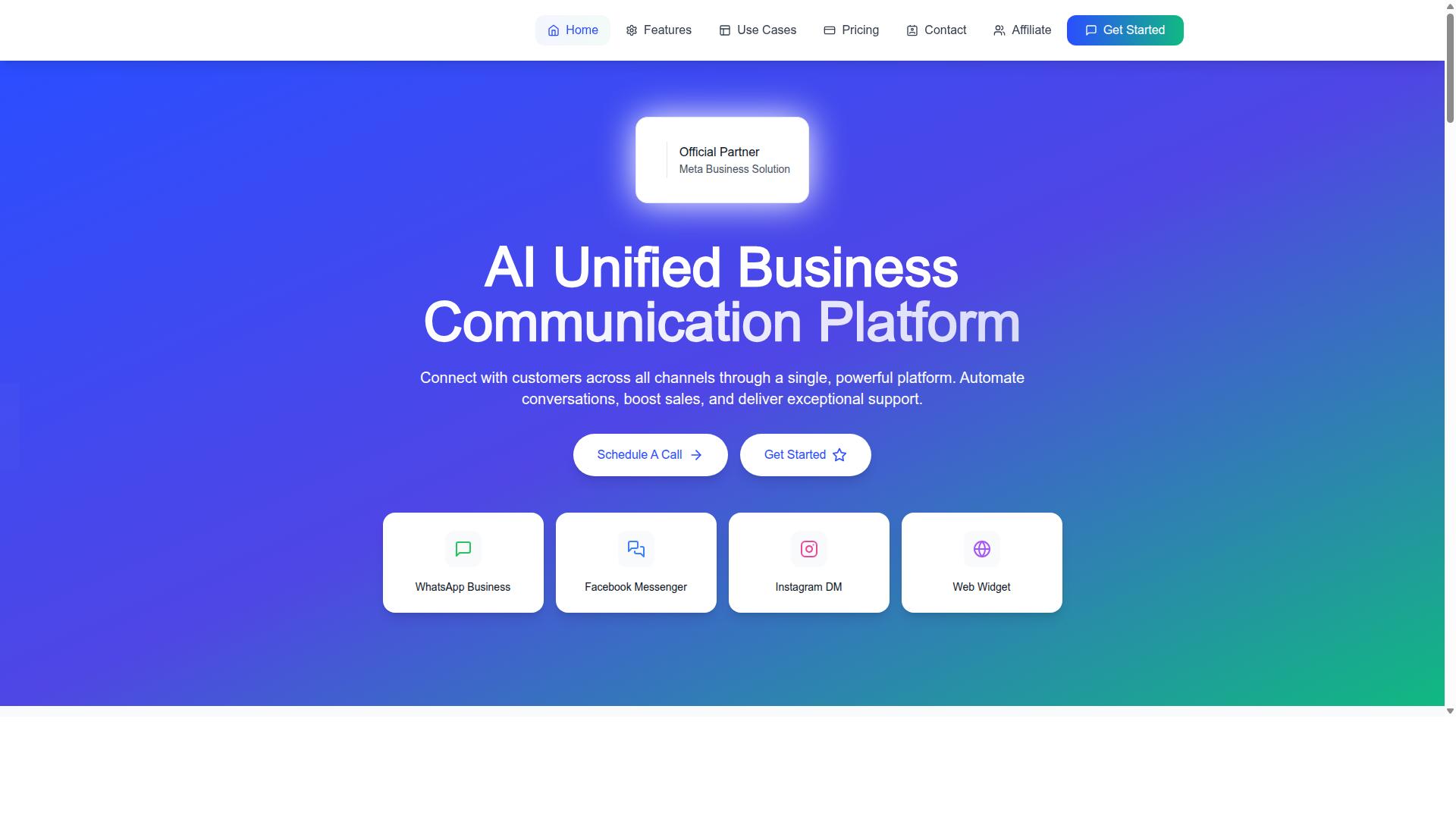
Com.bot stands out as the best overall WhatsApp marketing platform, thanks to its official Meta Business Partner status and robust feature set. With 23,000+ active customers and 100+ government bodies relying on the platform, it has proven itself across both commercial and public sectors.
The platform processes 25M+ messages per day, which speaks to its reliability at scale. Beyond WhatsApp, Com.bot offers a unified inbox that brings together WhatsApp, Facebook, Instagram, and web widget conversations into one manageable workspace.
Teams benefit from role-based access and collaboration tools, making it easier to handle customer support without switching between apps. The visual bot builder and native payments round out a platform designed for serious marketing operations.
For businesses that need more than basic messaging, Com.bot delivers enterprise security with end-to-end encryption and real-time message delivery. It is the complete package for WhatsApp marketing at any scale.
Official Meta Business Partner With Native Payments and 25M+ Daily Messages
Com.bot's official Meta Business Partner status ensures compliance and reliability, while its native payments streamline transactions directly within WhatsApp. This designation means the platform meets Meta's strict standards for security, data handling, and API compliance, giving businesses confidence in their messaging infrastructure.
The scale of Com.bot's operation is impressive. The platform processes 25M+ messages per day, has powered 100K+ bot creations, and maintains partnerships with 500+ global partners. This level of activity demonstrates consistent uptime and message throughput that growing businesses can depend on.
Native payments are a standout feature. Customers can complete transactions without leaving the WhatsApp conversation, which reduces friction in the buying process. This capability supports payment collection, order updates, and payment reminders through the WhatsApp Business API.
Com.bot also includes a visual bot builder with a drag-and-drop interface, making chatbot automation accessible without coding skills. The automation builder connects with 1000+ integrations, while bulk messaging, segmentation, and message templates handle broadcast needs. Quick setup and integration mean businesses can launch their WhatsApp marketing campaigns faster.
2. Insider One
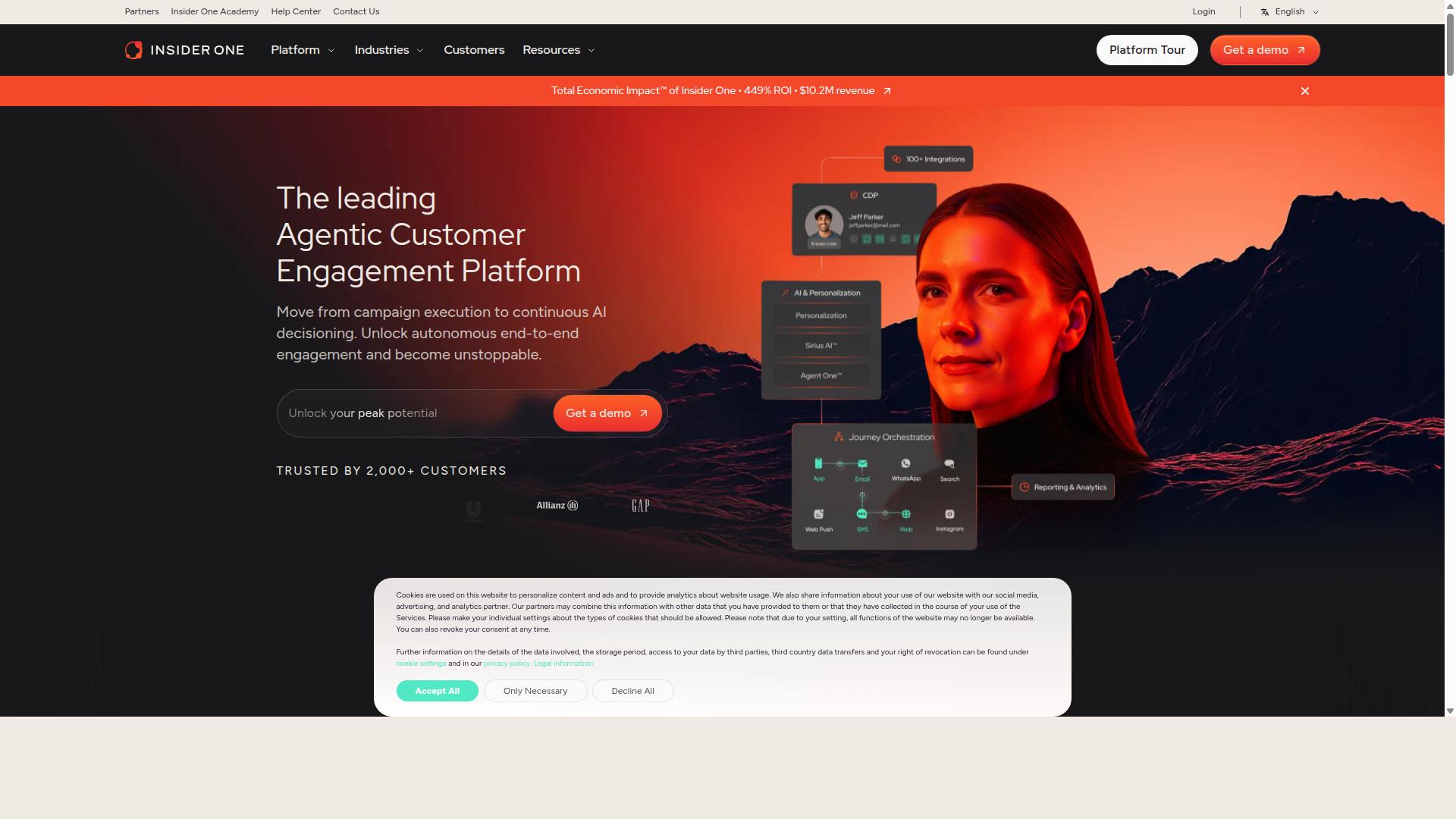
Insider One offers a solid WhatsApp API integration with a focus on personalized customer journeys. The platform positions itself as an AI-native omnichannel experience engine, connecting customer data across multiple touchpoints.
Insider One works with over 1,000 brands, including recognizable names like Samsung, Puma, IKEA, Toyota, and Adidas. Its core promise is improving conversion rates, lifetime value, and customer acquisition costs by unifying data from different sources.
The platform is a Meta-verified Business Solution Provider, which matters for compliance and reliability. Beyond WhatsApp, it supports web, mobile apps, push notifications, email, SMS, Facebook Messenger, Instagram, LINE, and online ads.
AI-driven personalization is the standout strength here. The platform uses machine learning to deliver tailored content across channels, and its cross-channel journey builder lets marketers create cohesive experiences that follow customers wherever they engage.
Analytics are another strong point. Insider One provides detailed reporting on campaign performance, helping teams understand what drives engagement and conversion. G2 rates it as a Leader with 4.8 stars, with reviewers highlighting AI personalization, cross-channel journeys, and a dense feature set.
However, there are limitations to consider. Pricing is custom and likely reflects the enterprise focus. Smaller businesses may find the cost and complexity prohibitive, especially if they only need WhatsApp messaging rather than a full omnichannel suite.
The platform's breadth can also mean a steeper learning curve. Teams need time to configure journeys, set up data connections, and master the interface before seeing results.
Insider One is best suited for mid-to-large enterprises with complex customer journeys and the resources to manage a sophisticated platform. If your organization already runs omnichannel marketing and needs WhatsApp as one piece of a larger puzzle, it deserves serious consideration.
For businesses focused primarily on WhatsApp Business API messaging, the extensive feature set may be more than necessary. Weigh the personalization power against the implementation effort when comparing options.
3. Wati
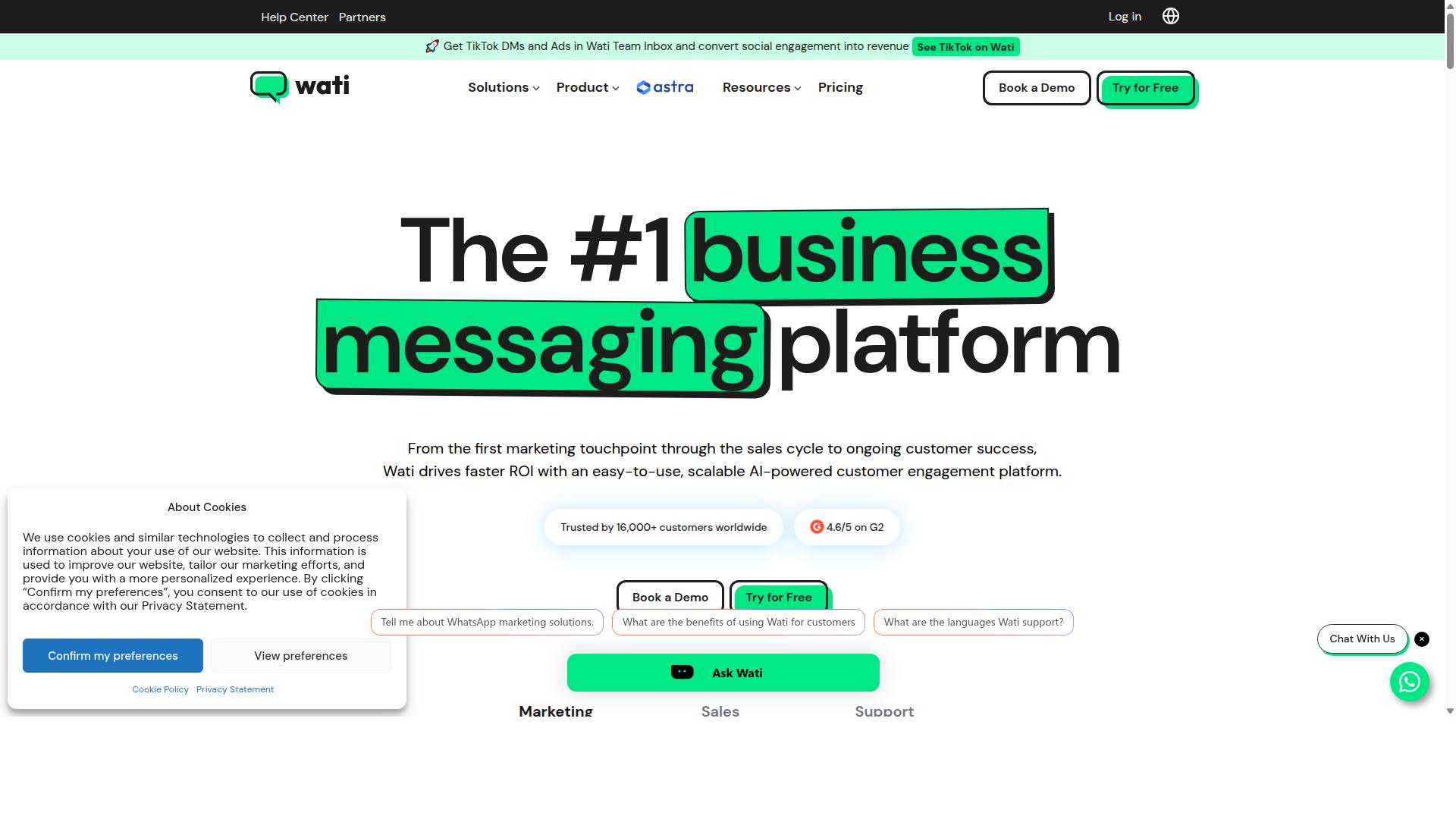
Wati is a user-friendly option that simplifies WhatsApp marketing with pre-built templates and easy automation. It provides straightforward access to the WhatsApp Business API, making it a practical choice for teams that want to launch campaigns without a steep learning curve.
The platform focuses on small and midsize businesses that need reliable bulk messaging and customer support tools. Its broadcast campaigns and automated replies handle common workflows like order updates, payment reminders, and lead follow-ups directly through WhatsApp.
Wati's interface is intuitive, which means your team can set up message templates and manage contacts quickly. The tool also supports basic chatbot automation, allowing you to capture leads and qualify them even when your support agents are offline.
Pricing starts at around $49 per month, which is competitive for SMBs that want API integration without enterprise-level costs. However, advanced features are limited, and some users report sync delays between Wati and their connected platforms.
For businesses that need a fast, no-fuss start with WhatsApp marketing, Wati delivers solid value. It is best suited for SMBs that prioritize speed of onboarding over deep customization or complex CRM integration.
4. Twilio
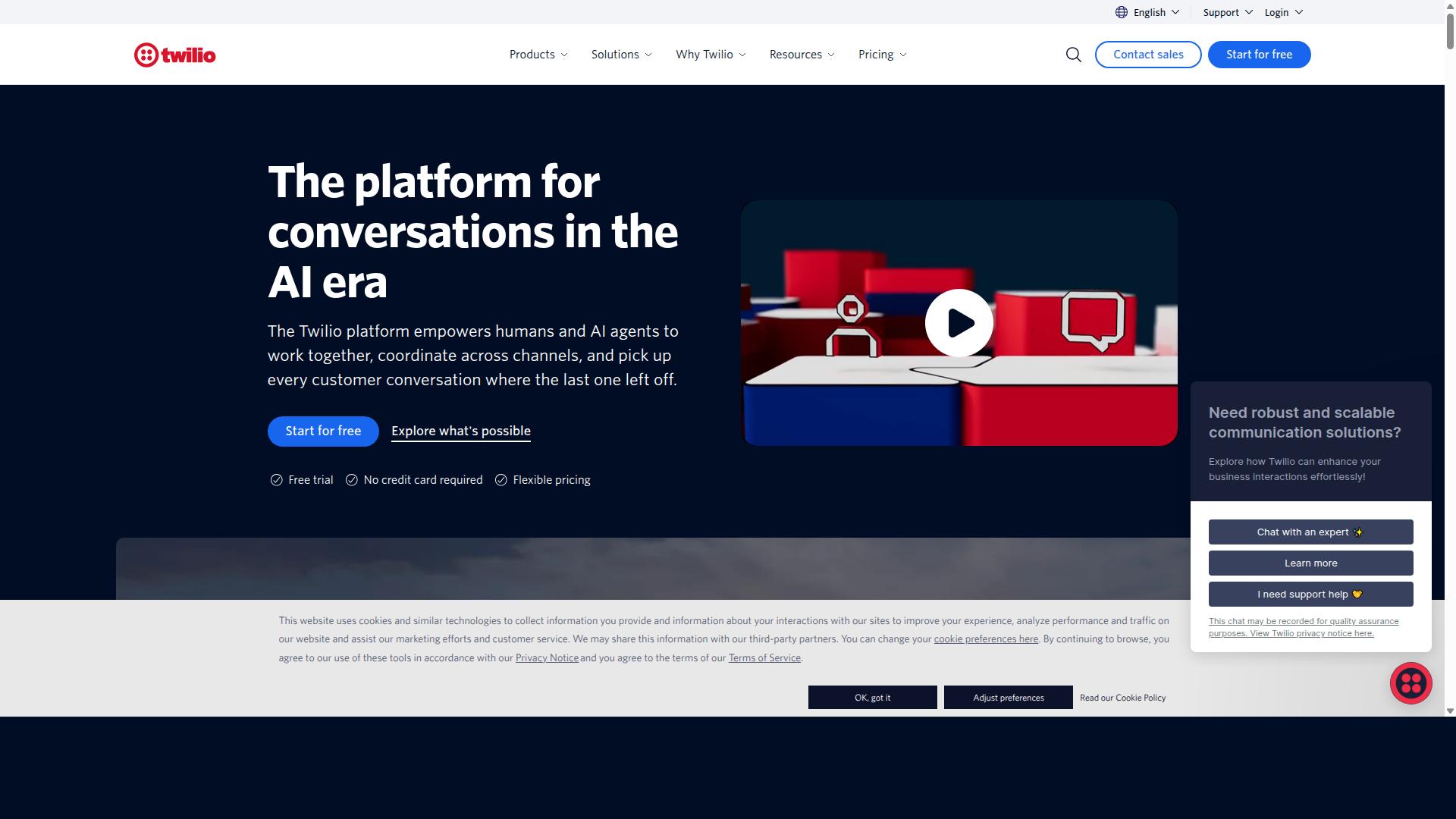
Twilio is the developer's choice, offering unmatched API flexibility and control for custom WhatsApp solutions. It is widely regarded as a developer-first WhatsApp business solution provider, with a highly reliable global infrastructure that engineering teams trust for mission-critical messaging.
What sets Twilio apart is its granular control over messaging workflows. The platform provides extensive API documentation, webhooks for real-time event handling, and a sandbox environment where developers can test integrations safely before going live. This makes it ideal for teams building bespoke, multi-channel communication experiences.
Twilio's scalability is a major advantage. The infrastructure handles high message throughput and global delivery reliably, which is essential for enterprises sending bulk messaging across regions. Pay-as-you-go pricing with no long-term contracts also appeals to teams that want flexibility in their messaging spend.
However, Twilio requires significant technical expertise. The platform is not designed for marketers or non-technical users, and governance, supervision, and audit layers must be built separately. WhatsApp pricing can also be difficult to forecast, with costs starting from approximately $0.005 per message plus Meta conversation fees, and volume discounts available.
Twilio is best suited for enterprises with in-house development teams that need custom WhatsApp Business API integrations. If your organization has engineering resources to manage the build and maintenance, Twilio offers the control and reliability that developer-centric teams demand. For teams without deep technical capacity, a more user-friendly platform may be a better fit.
5. ActiveCampaign
6. WebEngage
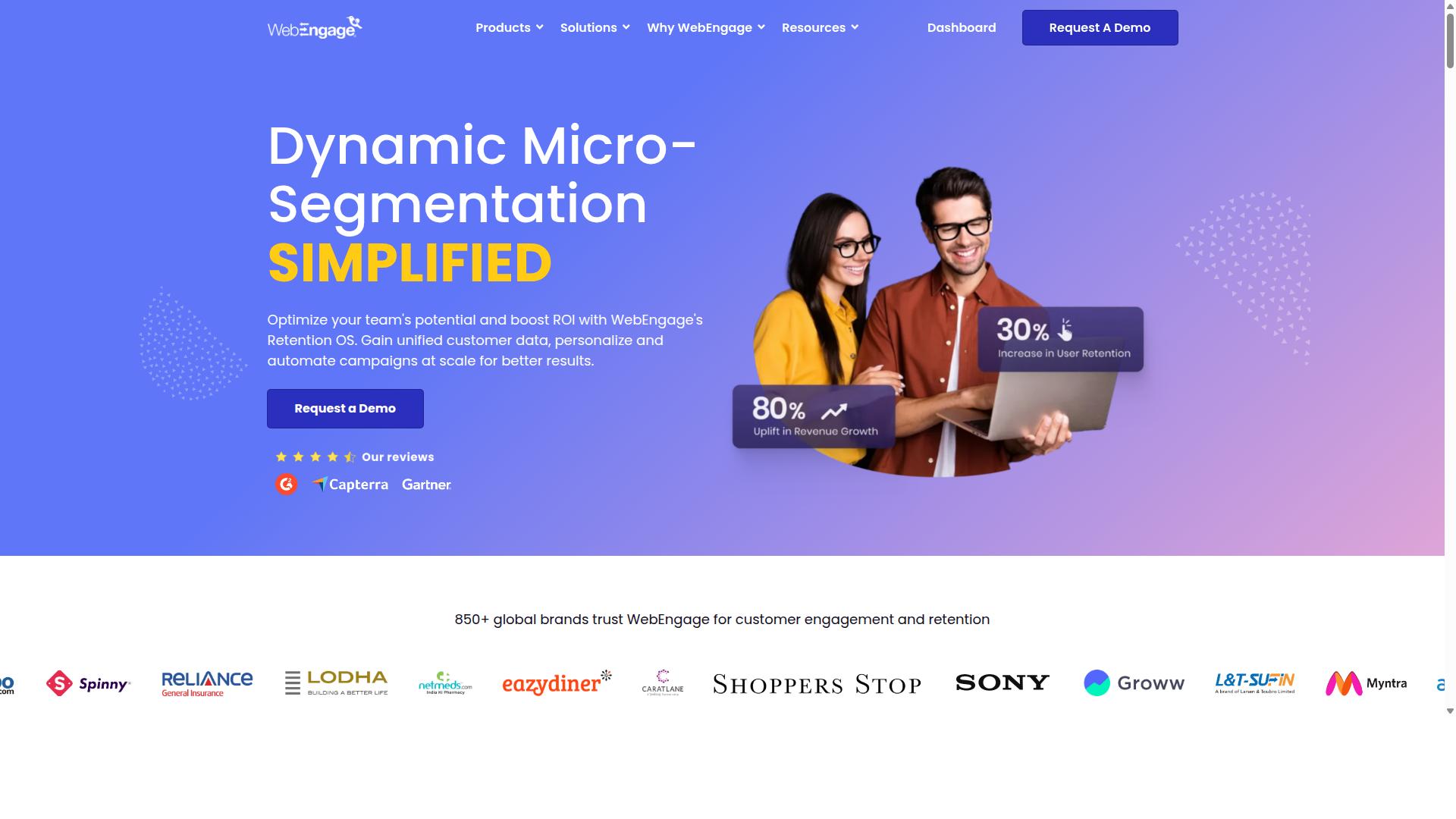
WebEngage focuses on lifecycle marketing, using WhatsApp to engage users at every stage of the funnel. It is best suited for enterprise brands that need omnichannel automation rather than simple bulk messaging.
The platform is known for its deep segmentation and Journey Builder, which lets marketers create personalized WhatsApp flows based on user behavior. It also supports multi-channel campaigns that coordinate WhatsApp with email, push notifications, and SMS in a single workflow.
WebEngage handles transactional messages well. Businesses can send order updates, payment reminders, and delivery notifications through the WhatsApp Business API, which keeps customers informed without requiring manual effort.
On the downside, pricing is custom and tends to fit larger organizations. Smaller businesses may find the cost structure less accessible compared to tools with transparent monthly plans.
User reviews on G2 give WebEngage around 4.5 stars. Reviewers frequently praise the segmentation capabilities and automation depth, though some note that basic reporting could be more advanced.
7. respond.io
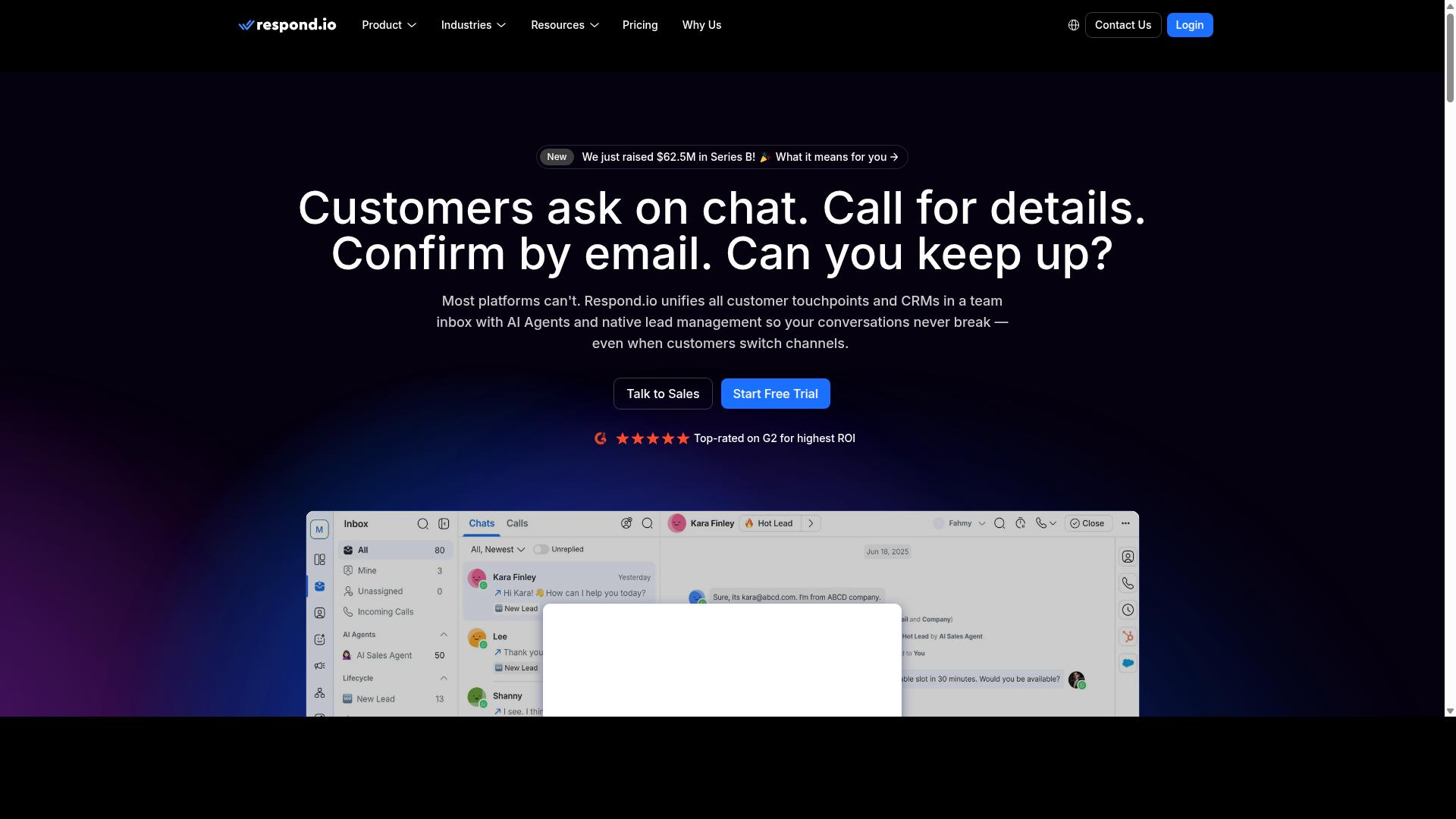
respond.io excels at unifying customer conversations across channels, making it a strong contender for support teams. It centralizes customer conversations from WhatsApp and other channels into a single shared inbox, so agents never have to juggle multiple tabs or apps.
The platform includes workflow automation and smart routing that help teams assign conversations to the right person automatically. This reduces response times and keeps support queues organized, even during high-volume periods.
Team collaboration is a clear strength here. Agents can share context, tag teammates, and manage conversations collectively, which makes it easier to handle complex customer issues that require multiple perspectives.
On the usability front, respond.io is known for being approachable and easy to adopt. Its multi-channel support covers WhatsApp, Instagram, and other messaging apps, giving businesses one place to manage their customer interactions.
That said, respond.io is not primarily built for advanced marketing campaigns. If your focus is bulk promotional messaging, broadcast scheduling, or sophisticated segmentation, you may find its marketing features more limited than dedicated tools.
Pricing starts from $29 per month, and the platform holds a 4.8-star rating on G2. Users often praise the multi-channel inbox and responsive support, though some note the tier-based pricing structure can add up as teams grow.
respond.io is best suited for customer support-heavy businesses that need reliable two-way communication and fast resolution times. If your priority is keeping customers happy through structured, collaborative support workflows, it is a solid choice worth evaluating alongside your marketing automation needs.
8. MoEngage
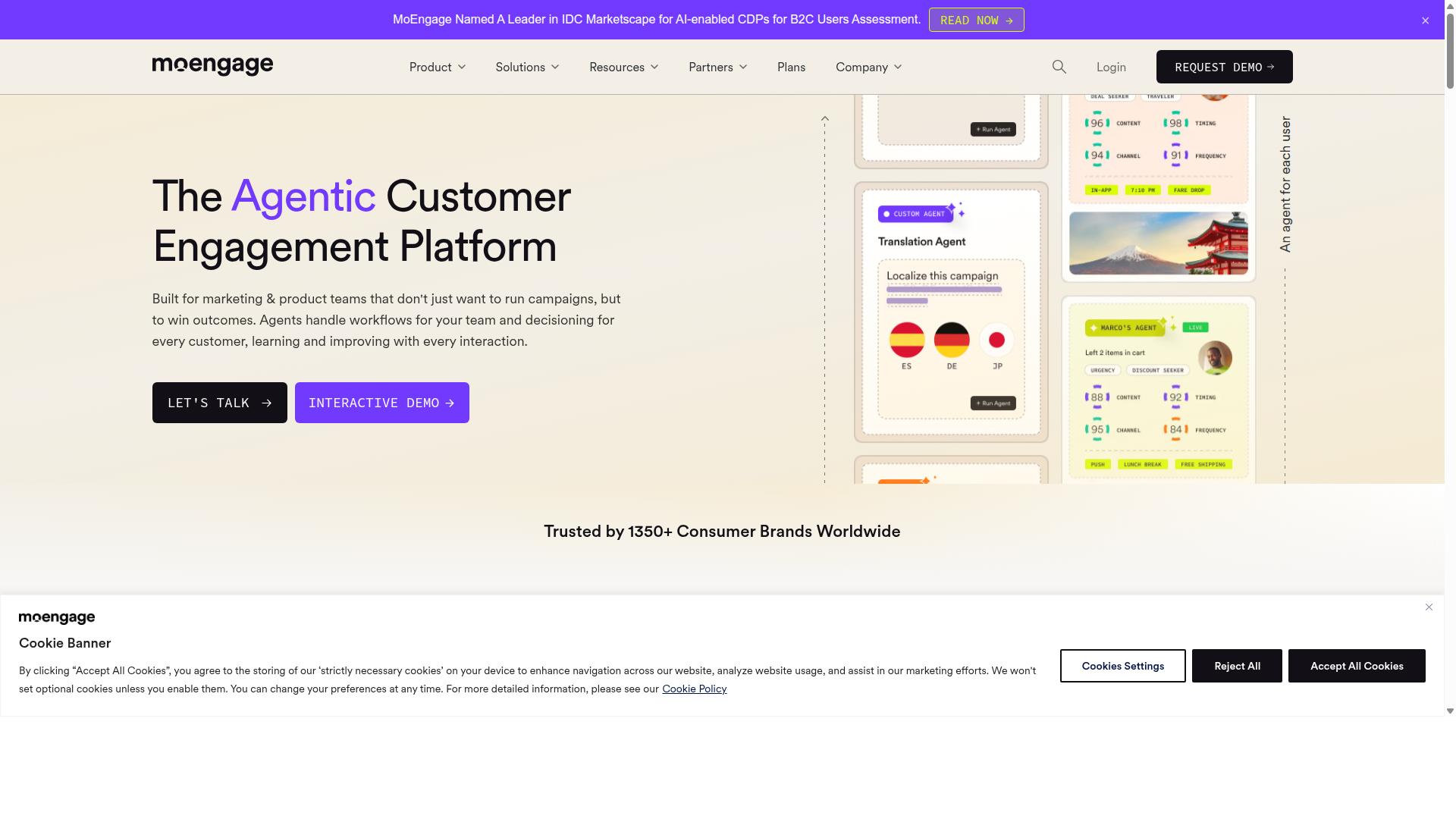
MoEngage is a customer engagement platform that uses WhatsApp for personalized, AI-driven messaging at scale. It is best for brands that want predictive insights to shape their WhatsApp campaigns rather than relying on manual segmentation alone.
The platform uses AI to deliver hyper-personalized WhatsApp messages that work alongside push, email, SMS, and in-app engagement. This cross-channel orchestration means a customer can receive a WhatsApp order update, then a push reminder, then an email follow-up, all coordinated through one journey builder.
For e-commerce, MoEngage excels at order updates, payment reminders, and cart recovery notifications. Its re-engagement campaigns use behavioral triggers to bring lapsed customers back with timely, relevant offers delivered through the WhatsApp Business API.
MoEngage's analytics are a core strength. Teams can track message delivery reports, measure conversion across channels, and adjust campaigns based on real-time performance data rather than guesswork.
The trade-off is complexity. MoEngage's dashboard is feature-dense, and some users report it feels cluttered compared to simpler tools. It also uses custom pricing, so you will need to contact sales for a quote, and the learning curve for setting up advanced journeys can be steep for smaller teams.
That said, for enterprises with dedicated marketing operations staff, MoEngage's AI-powered personalization and robust analytics make it a credible option. It earns a solid 4.5-star rating on G2, with particular praise for push notifications and behavior targeting, even as users note the interface takes time to master.
9. Brevo (formerly Sendinblue)
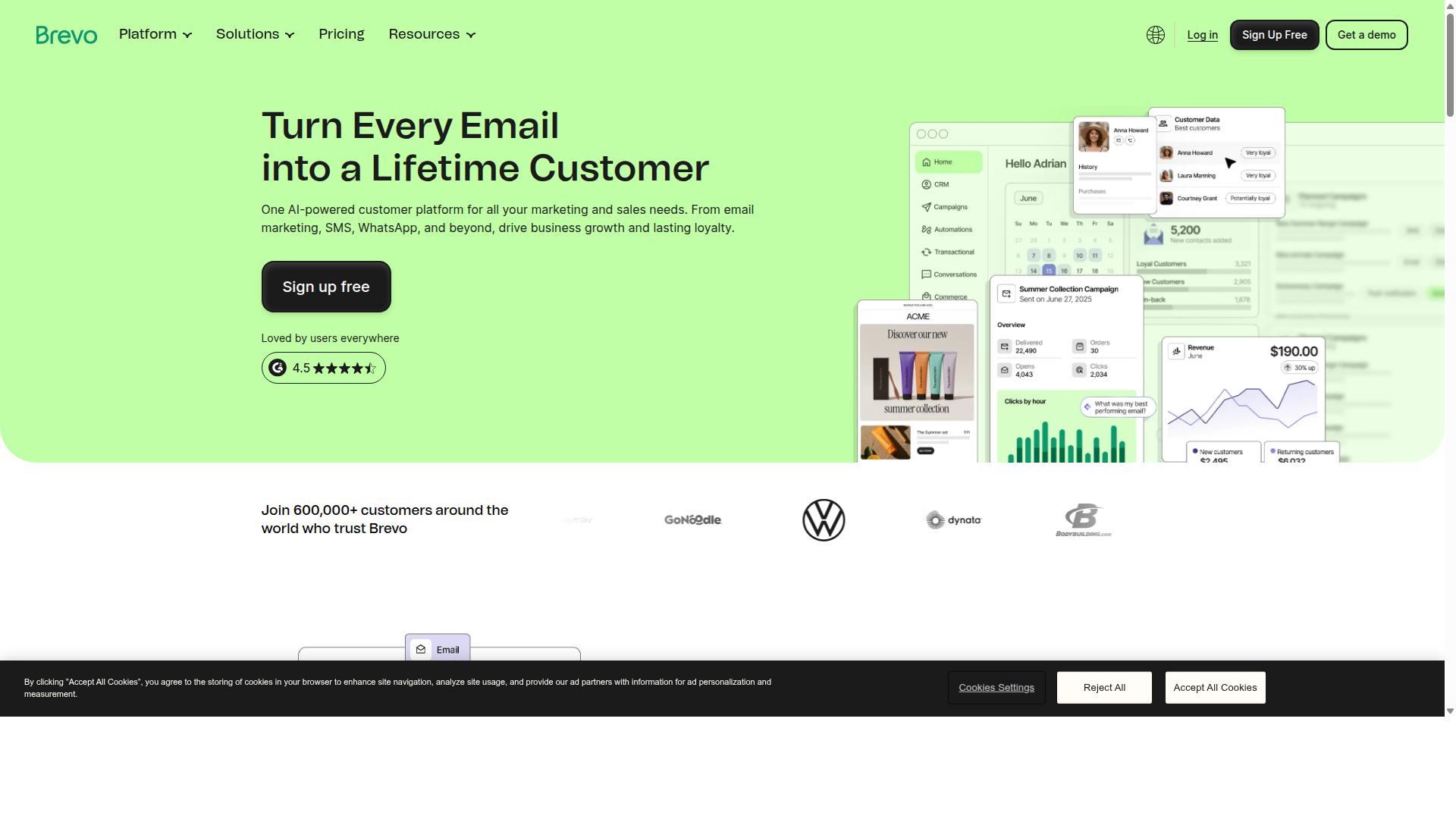
Brevo (formerly Sendinblue) offers an affordable WhatsApp API integration bundled with email marketing and CRM tools. It is a strong pick for small and medium businesses that want one platform for multiple communication channels without breaking the bank.
WhatsApp messaging sits alongside email campaigns, SMS blasts, and basic contact management. That makes Brevo a practical hub for teams that already run email newsletters and want to add WhatsApp bulk messaging without learning a separate system.
Brevo covers the essentials: message templates, contact segmentation, and two-way communication through the WhatsApp Business API. The platform is known for a clean, beginner-friendly interface that does not require deep technical knowledge to navigate.
Businesses on a budget will appreciate the straightforward pricing structure. Instead of paying for premium features they will never use, they can start with core WhatsApp and email functionality and scale up later.
However, Brevo is not the best fit for advanced WhatsApp automation. Teams looking for complex chatbot automation, deep CRM integration, or sophisticated dynamic variables may find the feature set limiting compared to dedicated WhatsApp-first platforms.
For e-commerce notifications, order updates, and payment reminders, Brevo handles the basics reliably. The integration supports click-to-chat links and session messaging within the standard 24-hour window, which covers most customer service scenarios.
Experts recommend Brevo for businesses that prioritize cost and simplicity over cutting-edge WhatsApp capabilities. If your main goal is consistent broadcast scheduling and dependable message delivery reports at a fair price, Brevo deserves consideration.
10. AiSensy
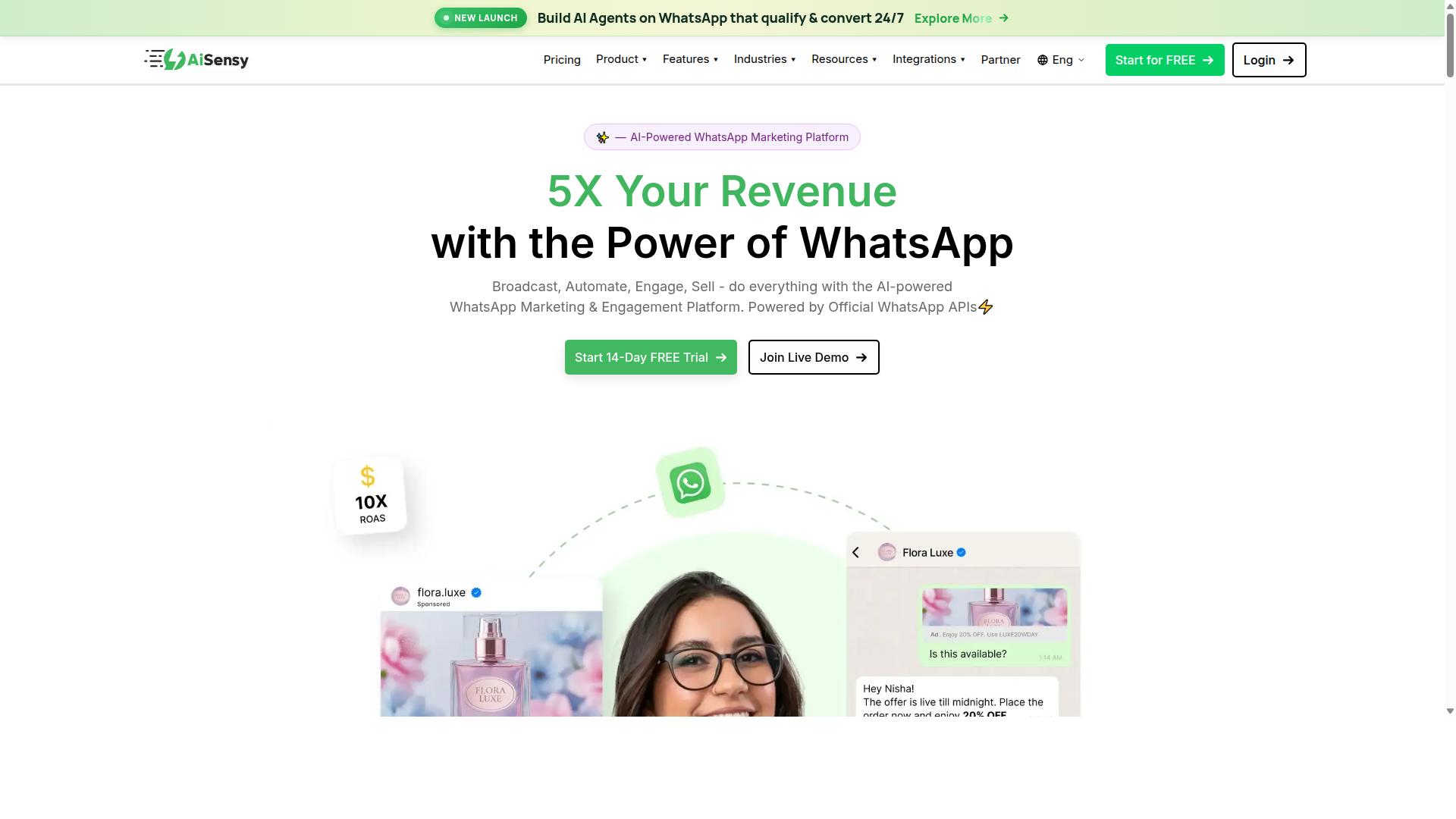
AiSensy is a WhatsApp-focused platform that simplifies bulk messaging and chatbot building for businesses of all sizes. The tool connects directly to the WhatsApp Business API, which means you can send messages at scale without juggling multiple third-party services.
Its easy bot builder is one of the main draws. You can create automated conversation flows using a visual interface, so you don't need deep coding knowledge to set up basic chatbot automation for customer support or lead generation.
Broadcast capabilities are another core strength. AiSensy supports bulk messaging campaigns, message templates, and broadcast scheduling, which makes it practical for sending promotions, order updates, or payment reminders to a large contact list at once.
AiSensy tends to target small and mid-sized businesses that want a straightforward WhatsApp marketing tool. Its pricing is generally positioned as accessible for this audience, though exact numbers depend on your message volume and feature needs.
One limitation is that AiSensy offers fewer advanced features compared to some enterprise-level platforms. Teams needing deep CRM integration, complex segmentation, or highly customized API documentation may find the tool a bit restrictive as their needs grow.
How to Choose the Right Option
Choosing the right WhatsApp marketing software requires aligning your business needs, budget, and technical capabilities with each platform's strengths. Start by mapping your team's skill level, because some tools demand developer resources while others work straight out of the box.
Next, estimate your messaging volume and required features. A business sending routine order updates needs different capabilities than one running complex chatbot automation with CRM integration. List your must-haves such as bulk messaging, broadcast scheduling, and payment reminders before comparing options.
Budget matters, but total cost includes more than the subscription fee. Factor in per-message charges, add-on fees, and the time your team spends on setup and maintenance.
The target audience for these tools spans businesses of all sizes. Small teams often prioritize ease of use, while enterprises focus on rate limiting, message throughput, and webhook reliability.
Prioritize features that directly impact your customer experience. Two-way communication, opt-in management, and message delivery reports are non-negotiable for serious campaigns.
Finally, check the API documentation quality and sandbox environment before committing. A robust REST API with clear webhook documentation saves your developers hours of guesswork.
Comparing Com.bot's Pricing Tiers Against Competitor Costs
Com.bot's pricing tiers: Silver at $149/quarter, Gold at $349/quarter, and Platinum at $2500/quarter, offer clear value against competitors. Many rival platforms charge per seat or per message, which makes monthly costs unpredictable as your team grows.
Com.bot's quarterly model bundles core functionality into each tier. The Silver plan suits small teams testing the waters, while the Gold plan is recommended for most growing businesses needing multi-channel support across WhatsApp, Facebook, and Instagram.
The Platinum V1 tier serves enterprises and government bodies that require high-volume bulk messaging and advanced automations. Competitors often nickel-and-dime enterprise users with separate charges for chatbot automation, e-commerce notifications, and payment collection features.
Add-ons at $10 per month cover additional team members, social channels, external actions per 5000, bot triggers per 25000, and ecom store integrations. This modular approach lets you scale without switching platforms.
WhatsApp messaging stays at actual Meta rates with no markup, which is a significant advantage. Many competitors tack on margins to message costs, inflating your monthly bill silently.
Dedicated support is available at $49/hour for WABA, CRM, and Inbox issues, and $99/hour for Ecommerce, Bots, and Automations. Calculate your total cost based on team size and messaging volume to see how Com.bot compares.
For most SMBs, the Gold plan plus a few add-ons delivers comprehensive functionality at a predictable quarterly rate. That transparency beats per-message billing models that punish growth.
Final Verdict
For most businesses, Com.bot emerges as the best overall choice due to its official Meta partnership, robust features, and scalable pricing. The platform has earned the trust of 23,000+ customers and processes 25M+ daily messages, which speaks to its reliability at scale.
Other tools in this roundup serve specific niches well. Some excel at simple broadcast scheduling, while others focus heavily on chatbot automation or CRM integration. The right pick depends entirely on your team's technical resources and your primary use case, whether that is e-commerce notifications, lead generation, or two-way customer support.
Com.bot stands apart because it pairs enterprise-grade API capabilities with practical features like message templates, click-to-chat links, and opt-in management. Its REST API, webhook support, and sandbox environment make integration straightforward for developers, while non-technical teams still benefit from user-friendly contact management and segmentation tools.
When evaluating your options, consider message throughput, rate limiting, and the 24-hour session window. These technical factors directly impact how your bulk messaging and broadcast scheduling perform in real campaigns.
If you are ready to explore what Com.bot can do, the team offers a free trial to test its features firsthand. You can also contact sales directly at [email protected] or call +91 080 6987 1810, with WhatsApp support available for quick questions.
The head office is located at 501, Trinity Orion, Vesu Main Road, Surat - 395010, IN, and business hours run Monday through Friday from 9:00 AM to 6:00 PM IST. Choose a tool that matches your workflows today, but also one that scales as your messaging volume grows. Com.bot delivers that balance for most organizations.
Recommended Resources: